









Arkansas is home to more than 76,000 motorcyclists for good reason.
Bikers here enjoy beautiful winding scenic rides during a large portion of the year. From the Arkansas Pig Trail to the Melbourne Run, there is no shortage of fun motorcycle rides in the “Natural State.” As a motorcyclist, it is important to follow the rules of the road, as well as all applicable Arkansas motorcycle helmet laws. Motorcycle helmet laws can prevent you from suffering serious injury and harm if you are involved in an accident. In fact, it is often your only form of protection during a crash. But are you required to wear a helmet at all times? What happens if you do not wear a helmet? Understanding Arkansas’ motorcycle helmet laws is an important part of staying safe out on the open road. To learn more, schedule a consultation with an experienced motorcycle accident attorney.
Helmet laws help protect motorcyclists from suffering serious injury and harm. However, not all states have universal helmet laws, and Arkansas is one of them. In 1997, the state’s mandatory motorcycle helmet law was repealed. Instead, legislators enacted a law that only required motorcyclists and passengers under the age of 21 to wear a helmet. This repeal had significant consequences for motorcyclists.
A 6-year retrospective study found that after the repeal, motorcyclists had significantly more severe head and neck injuries. In addition, they suffered higher medical expenses and more fatalities. The researchers concluded that the repeal of the mandatory helmet law was associated with an increase in the non-helmeted crash scene fatality rate and disproportionately higher hospital admission rates.
After Arkansas repealed its universal helmet law, more riders and passengers were seen on their bikes without helmets. In states like Arkansas, which do not have a universal helmet law, only 60 percent of riders actually wear helmets. In mandatory helmet states, 97 percent of bikers wear helmets while riding.
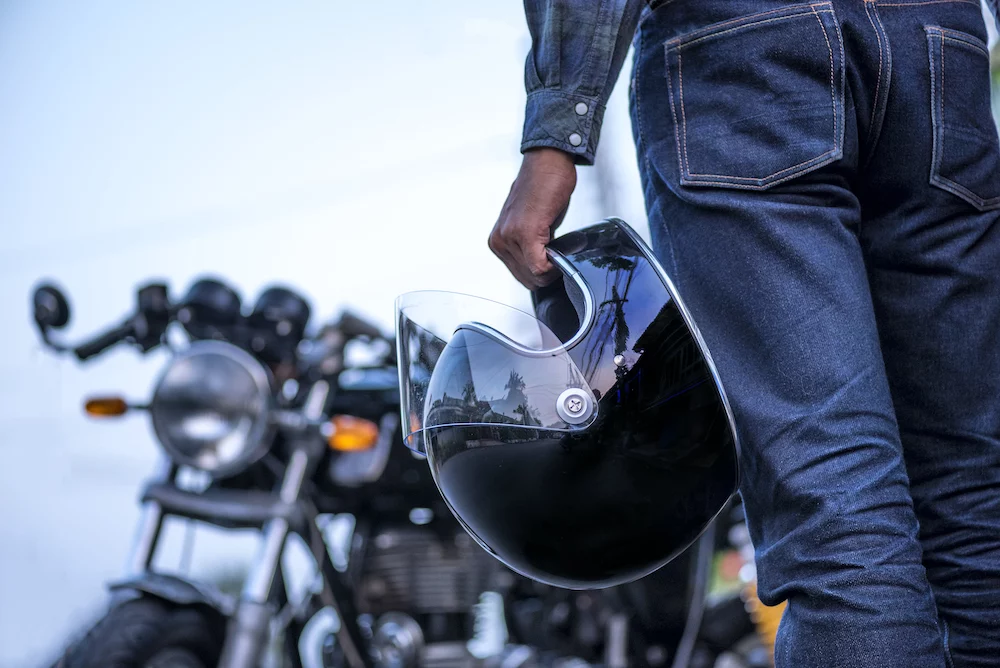
Even though Arkansas motorcyclists 21 and older are not required to wear a helmet when riding, it is still the safest thing to do. Helmets decrease the chances of suffering a serious and life-threatening injury. In fact, studies have shown that helmets reduce the risk of death by up to 42 percent. Unhelmeted riders are also 3x more likely to suffer serious and fatal traumatic brain injuries than helmeted riders. According to the CDC, one study found that wearing a motorcycle helmet actually reduces your risk of suffering a brain injury by up to 69 percent.
Unfortunately, some bikers believe that wearing a helmet increases their risk of suffering neck injuries. They are also concerned that it will impact their peripheral vision and hearing. However, there are no credible studies that back up these fears and concerns. In fact, more than a dozen studies have actually found the opposite to be true. Wearing a helmet does not restrict your ability to hear horns or traffic noises, nor does it obstruct your view when changing lanes.
Although not required by Arkansas law, to protect yourself from serious head injuries, it is important to choose a DOT-approved motorcycle helmet. You can choose from full face helmets, open face helmets, and half helmets. Full face helmets provide the most coverage and protection. Half helmets provide the least amount of coverage, but are better than not wearing a helmet at all. However, studies have shown that bikers wearing half helmets were twice as likely to suffer traumatic brain injuries as those wearing full face or open face helmets.
Another aspect to consider when choosing a helmet as an Arkansas motorcyclist is visibility. While black may seem cool, it is less likely to help you stand out in traffic and on the open road. Consider a colorful helmet that has reflective properties as well. If your motorcycle helmet does not have reflective strips, you can purchase reflective tape to add to it.
Why are color and reflection so important? It can help other drivers see you on the road! A study by BMJ found that riders wearing bright or reflective motorcycle gear had a 37 percent lower risk of crash. When riders simply wore a white helmet, they had a 24 percent lower risk of getting into a motorcycle accident than riders who wore black helmets.
Helmet requirements are not the only equipment rule that applies to riders in Arkansas. Under Arkansas Code Annotated § 27-20-104, every motorcycle operator and passenger must wear protective glasses, goggles, or a transparent face shield while riding on public streets and highways, regardless of age. This requirement exists because flying debris, insects, dust, and wind can impair a rider’s vision in an instant, and even a brief lapse in visibility can lead to a serious wreck.
Unlike Arkansas motorcycle helmet law, the eye protection requirement does not include an age exemption. Whether you are nineteen or ninety, you are to wear some form of eye protection whenever you operate or ride on a motorcycle. Acceptable options include shatter-resistant goggles, wrap-around glasses, or a transparent face shield attached to your helmet. Choosing well-fitted eye protection can help you react quickly to hazards, keep dust and debris out of your eyes, and avoid the kind of split-second distraction that often leads to a collision on Arkansas roadways.
Arkansas motorcycle helmet laws address more than what a rider wears on their head. Under Ark. Code Ann. § 27-20-104, any motorcycle built to carry a passenger must also include a permanent seat, along with handholds and footrests designed for that passenger. These requirements exist because a passenger without a secure place to sit or brace themselves faces a much higher risk of being thrown from the motorcycle during a sudden stop or collision.
The rule reflects a simple reality: a passenger depends on the equipment beneath and around them just as much as a rider depends on a helmet. A motorcycle that is not properly outfitted to carry a passenger increases the risk of a fall long before a collision with another vehicle ever occurs.
Whether you were wearing a helmet at the time of your crash can influence how an insurance company evaluates your motorcycle accident claim, even though state law does not require riders over the age of twenty-one to wear one. Because the state follows a modified comparative fault system under Ark. Code Ann. § 16-64-122, you cannot recover compensation if you are found to be fifty percent or more at fault for the wreck. Insurance adjusters sometimes seize on the absence of a helmet and argue that your injuries would have been less severe, or would not have happened at all, had you been wearing one, even when the other driver caused the crash.
Arkansas motorcycle helmet rules apply only to riders under twenty-one, so choosing not to wear one as an adult is not, by itself, evidence of negligence. An insurer may still try to use this argument to reduce your settlement, but the real question in any motorcycle accident claim is who caused the crash, not what safety gear you chose to wear that day.
Our attorneys could review your case by examining the police report, the other driver’s conduct, and your medical records to determine how the wreck actually happened. If you wore a DOT-approved helmet, that decision can also help demonstrate responsible riding habits and may support a stronger claim by reducing the visible severity of head injuries. Since founding the firm in 2006, Rainwater, Holt & Sexton has recovered more than one billion dollars for injured clients, and we bring that same level of experience to countering the arguments insurance companies raise about helmet use in a motorcycle claim.
Whether your motorcycle accident was minor or major, our experienced motorcycle injury attorneys are here for you.
At Rainwater, Holt & Sexton, we will evaluate your case, examine all aspects of your accident, and explain your legal options, so you can choose the path that is right for you and your family. With offices throughout Arkansas – Little Rock, Springdale, Conway, Hot Springs, Bryant, Jacksonville, and Jonesboro – our personal injury lawyers are easily accessible when you need help.
Best of all, our No Fee Guarantee means that you pay nothing until we win your case. Connect with us online or call us today to learn more about Arkansas motorcycle helmet laws.
 N/a
N/a