










You probably pass guardrails every day and never give them a second thought. However, guardrails are an important safety feature on the highway.
Their primary purpose is to provide a layer of protection for motorists who have drifted off of the road. When a stretch of road has a steep embankment or a drop-off, a guardrail can be the only thing protecting drivers and passengers. They’re also great at keeping motorists from running into trees, or other structures, such as bridge piers or retaining walls.
Unfortunately, while guardrails are intended to protect car occupants from serious injury, they can actually become the cause of it. In fact, guardrails are often ranked as one of the highest sources of injury and fatality collisions in fixed-object crashes. The reason for many of these injuries and fatalities is the type of treatment used at the end of the guardrail facing oncoming traffic. Some end terminals have energy–absorbing properties; however, some do not.
If you were in a wreck because of a guardrail issue, talk to an Arkansas guardrail accident lawyer on our team. Our car collision attorneys have experience with these types of cases.
While guardrails are intended to protect car occupants and save lives, poorly designed or maintained guardrails can actually cause accidents and increase the risk of serious injury or death. In head-on collisions and T-bone accidents, guardrails may not have performed as they were intended to. This failure could be due to many reasons, including design flaws, improper installation, and improper maintenance.
In many of these fatal collisions, the guardrail itself actually impaled the vehicle due to design flaws. Guardrails are intended to telescope when they’re impacted. This is supposed to slow down the vehicle and absorb some of the impact to protect the occupants. When they don’t telescope as they’re designed to, the vehicle can be impaled by the guardrail end and occupants can be fatally injured.
Serious car accidents, truck accidents and fatalities can also be caused when a guardrail is not installed properly. Some construction companies and road crews may take shortcuts when it comes to installing guardrails or they may simply not install them properly out of lack of knowledge. For example, a Federal Highway Administration survey found that guardrail installation crews often struggled when installing X-LITE end terminals because the instructions on proper placement and installation were unclear. This created a serious hazard on the road when accidents occurred.
If you are dealing with the aftermath of a car crash involving guardrails, talk to our attorneys in Arkansas today.
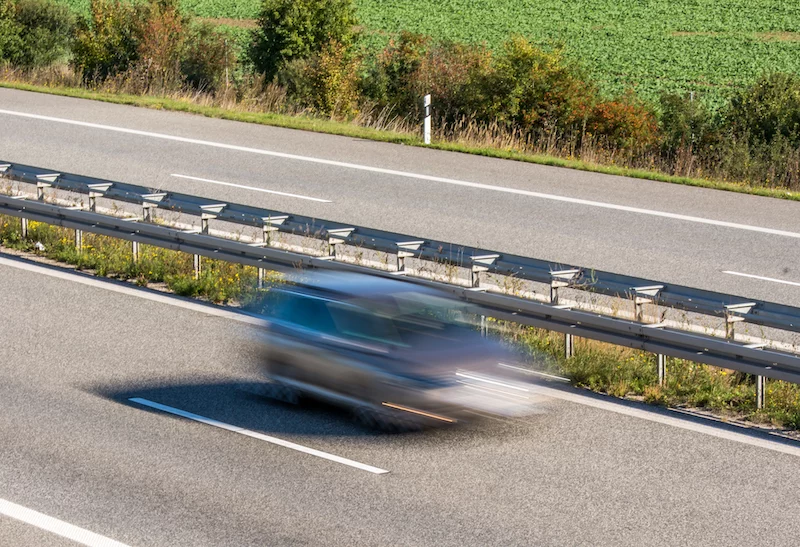
In many fatal guardrail collisions, the guardrail was not designed or installed at a proper height. Height is critical when considering how a guardrail may prevent a fatal accident and save someone’s life. Guardrails that are not built high enough may not prevent vehicles from jumping over them. Likewise, guardrails that are built too high can create too much space beneath them, allowing motorcyclists to slide underneath.
In addition to poorly designed or manufactured guardrails, some guardrails are simply not maintained properly and can become dilapidated over time. The ground around them may erode and they may no longer be able to withstand the forces of an accident. When this occurs, your local, state, or federal government may be held accountable for the accident and the injuries involved.
Across the country, there are numerous dangerous roads that don’t have the guardrails installed to prevent serious accidents from occurring. These roads may have a high risk for a head-on collision, rollover accidents, sliding off of steep roads with little shoulder, or careening off the road and into trees. When city, county, or state departments try and cut costs, they may fail to install guardrails on roads that desperately need them. When this occurs, they may be held accountable for any serious accidents that occurred on that road.
The amount of time you have to file a claim depends largely on who is to blame. While most accident victims have three years to file a claim, if your claim is against a government entity, you may have even less time. As such, act quickly after a serious guardrail accident in Arkansas and contact a lawyer.
Even a guardrail that looks intact from a passing car can already be compromised long before the next collision. Guardrails absorb tremendous force with every impact, and once that structural integrity is disturbed, the system may no longer perform the way engineers designed it to.
Bent, cracked, or leaning posts are among the most common signs of a compromised guardrail. Posts are meant to hold the rail at a consistent height and angle so the system can catch a vehicle and guide it back toward the roadway. When a post is knocked out of alignment, even slightly, the rail above it can twist or dip, creating a gap or an angle that no longer matches the guardrail’s original design. A leaning post may still look functional from the road, but the anchoring beneath the surface could be loosened or fractured.
Tension anchors present another hidden hazard. These anchors hold the cable or rail under the correct amount of tension so the barrier flexes and absorbs energy instead of snapping on impact. A broken or loosened anchor can allow slack to build up along the line, and a guardrail with the wrong tension may collapse, buckle, or fail to slow a vehicle at all.
Torn or shifted rail sections are also common after a prior wreck. Even when a damaged section is bolted back into place, the connection points may no longer align the way they did before the impact. A misaligned splice can leave a seam that catches a vehicle’s bumper or wheel rather than deflecting it, and that seam can turn a guardrail into a launching point instead of a safety barrier.
Perhaps the most dangerous type of damage is the kind you cannot see. An impact can shift a guardrail’s internal components, including the beam’s bolted connections and the soil compaction around buried posts, without leaving any obvious exterior sign. A guardrail that appears straight and undamaged from the driver’s seat may have already lost much of its capacity to redirect a vehicle. This hidden shifting is one reason a visual inspection from a passing vehicle is never enough to confirm a barrier is safe.
Any one of these issues can compromise a guardrail’s core purpose: absorbing energy and redirecting a vehicle away from a fixed hazard. A barrier that has lost its structural integrity may bend the wrong direction, snap apart on contact, or fail to stop a vehicle from crossing into oncoming traffic or off an embankment. In these situations, the guardrail no longer functions as protection. Instead, it can become a hazard of its own, and the agency or contractor responsible for maintaining it may be liable for the resulting harm.
Once a guardrail sustains damage, the responsible transportation agency or maintenance contractor has a duty to identify the problem and make repairs within a reasonable period. In Arkansas, that responsibility often falls to the Arkansas Department of Transportation or a local municipality, depending on where the roadway is located. These agencies typically rely on routine inspections, driver reports, and law enforcement crash reports to learn that a barrier needs attention.
A proper inspection should examine more than the visible surface of the rail. Inspectors are expected to check post alignment, anchor tension, splice connections, and the surrounding soil for signs that an earlier impact loosened the system below ground. When an inspection reveals damage, the agency should schedule repairs, and in the meantime, warning signs or temporary barriers may be needed to protect drivers until permanent repairs are complete.
When an agency delays an inspection, ignores driver complaints, or performs a repair that does not restore the guardrail to its intended specifications, the barrier may remain a hazard for months or even years. Maintenance logs, inspection records, and internal communications can help establish how long an agency knew, or should have known, about a damaged guardrail before your collision occurred. Our Arkansas guardrail accident attorneys know how to request these records and use them to build a claim against a negligent government entity or contractor.
If you were injured because a damaged guardrail failed to protect you, do not assume the barrier was working as intended. Rainwater, Holt & Sexton could investigate the guardrail’s maintenance history, identify who was responsible for repairing it, and pursue the compensation you deserve for your injuries.
Guardrails are supposed to protect drivers from serious harm. However, when they’re installed improperly or designed defectively, these safety features can actually worsen accidents and injuries.
When you’ve been injured in a guardrail car accident, know that you are not alone. You need an experienced Arkansas guardrail accident lawyer on your side with the resources needed to tackle these cases. With eight offices in Arkansas – Little Rock, Little Rock – Corporate Hill, Springdale, Conway, Hot Springs, Bryant, Jacksonville, and Jonesboro – at Rainwater, Holt & Sexton, our car accident attorneys fight aggressively for your future and will handle the auto insurance companies so you can focus on your recovery. Seek our services today.
 N/a
N/a